5 Classic Things Every White Belt Does (And Why It’s Okay)
Every single black belt you see on the mats at Gracie Barra South Miami West Kendall started exactly where you are right now. They tied their belt wrong, they gassed out in two minutes, and they felt completely lost during their first sparring session. The white belt phase is a rite of passage. It is a time of immense learning, awkward movements, and humbleness.
If you are new to Brazilian Jiu-Jitsu, you might feel like you are the only one making mistakes. The truth is, there are certain behaviors that are practically universal among beginners. We have all been there. Recognizing these habits is the first step to overcoming them. Here are five classic things every white belt does, why they happen, and how you can fix them to accelerate your progress on the mats.
Brazilian Jiu-Jitsu in Miami
1. The Infamous “Death Grip”
This is perhaps the most common rookie mistake. You grab your opponent’s collar or sleeve, and you squeeze with 100% of your strength. You hold on for dear life, convinced that if you let go, you will lose.
Why It Happens
It is a natural stress response. When we feel threatened or off-balance, our instinct is to grab something tight. However, in Jiu-Jitsu, tension equals exhaustion.
The Consequence
Within 60 seconds, your forearms are burning. Your hands feel like claws that won’t open. You have burned all your energy on a grip that might not even be effective. Meanwhile, your opponent is relaxed and waiting for you to tire out.
How to Fix It
Relax your hands. Think of your hands as hooks, not clamps. Only squeeze when you are actively attacking or defending a critical movement. Learning to conserve your grip strength is a major milestone in your development at our West Kendall academy.
2. The “Bench Press” Escape
You are stuck on the bottom of the mount or side control. You feel the weight of your opponent crushing you. Your instinct kicks in: push them off! You extend your arms and try to bench press them toward the ceiling.
Why It Happens
Most people who start Jiu-Jitsu rely on the strength they developed in the gym or everyday life. Pushing away danger feels logical.
The Consequence
In Jiu-Jitsu, extending your arms away from your body is dangerous. It exposes your elbows to armbars and gives your opponent an easy lever to control you. Furthermore, unless you are significantly stronger than your opponent, bench pressing a human body is incredibly inefficient and tiring.
How to Fix It
Frame, don’t push. Instead of extending your arms, keep your elbows close to your ribs and use your skeletal structure to create a barrier. Most importantly, learn to use your hips. The power to escape comes from your legs and hips (the bridge and shrimp), not your triceps.
3. Forgetting to Breathe
It sounds simple, right? Breathing is essential for life. Yet, watch a white belt roll, and you will often see them turning red or purple, holding their breath until they explode in a gasp for air.
Why It Happens
Concentration and panic. When you are trying to remember a technique while someone is trying to pass your guard, your brain focuses so hard that it “forgets” to regulate breathing. You brace your core, which restricts your diaphragm.
The Consequence
Oxygen is fuel. If you stop breathing, your muscles deplete rapidly. You will “gas out” (run out of energy) very quickly, leading to sloppy technique and mental fog.
How to Fix It
Make breathing a conscious part of your training. Inhale through your nose and exhale through your mouth. Listen to the sound of your breath. If you find yourself holding it, force a long exhale. Staying calm and oxygenated is a superpower on the mats.
4. The “YouTube” Expert
You saw a flying armbar or a complex inverted guard move on Instagram or YouTube. You arrive at class, ignore the fundamental guard pass the instructor is teaching, and try to hit that fancy move during sparring.
Why It Happens
Jiu-Jitsu looks cool online. Beginners often want to skip the “boring” basics and jump straight to the movie-style submissions.
The Consequence
Advanced moves require advanced timing, balance, and leverage—things you haven’t developed yet. Trying them without a foundation usually results in getting passed, crushed, or even accidentally injuring a partner.
How to Fix It
Trust the process. The “boring” basics are what win fights and championships. Master the closed guard, the scissor sweep, and the cross-collar choke first. Build your house on a rock, not on sand. Our structured curriculum is designed to give you these tools in the correct order.
5. Apologizing for Everything
“Sorry!” “My bad!” “Oops, sorry!” If you hear this constantly during a roll, you are likely rolling with a white belt. They apologize for being heavy, for accidentally bumping a knee, or even for sweating.
Why It Happens
Jiu-Jitsu is an intimate and aggressive sport. Normal social rules don’t apply, but beginners haven’t adjusted yet. They feel like a burden or worry they are being rude by applying pressure.
The Consequence
While politeness is good, constant apologizing breaks the flow of training. It also puts you in a submissive mindset.
How to Fix It
Jiu-Jitsu is a contact sport. Pressure, sweat, and awkward positions are part of the deal. As long as you are safe and clean, you do not need to apologize for trying to win or for being heavy. Show respect by training hard and keeping your partner safe, not by saying sorry.
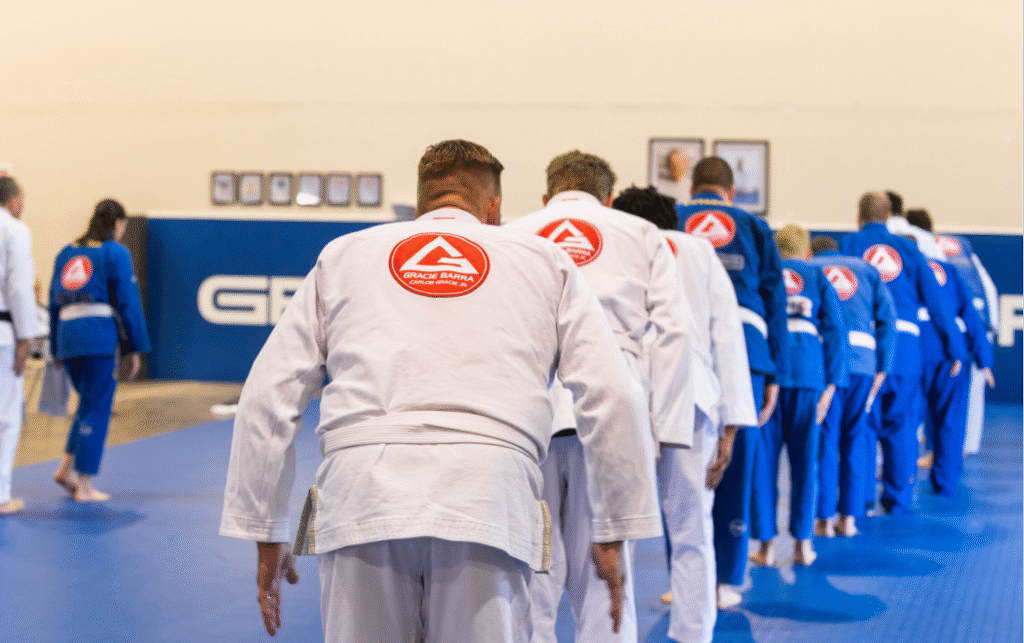
Embrace the White Belt Journey
If you recognize yourself in this list, don’t worry. It means you are exactly where you are supposed to be. The white belt is a time for discovery. Make mistakes, laugh about them, and keep showing up.
Brazilian Jiu-Jitsu in Miami
At Gracie Barra South Miami West Kendall, we are here to guide you through every awkward moment until the techniques become second nature.
Ready to start your journey (and make some mistakes)? Book your free trial class today!