
So You Got Your Blue Belt: A Guide to Navigating the Next Level
Earning your blue belt in Brazilian Jiu-Jitsu is a monumental achievement. It is the first major milestone on the path to black belt, signifying that you have moved past the novice stage. You have survived the initial learning curve, mastered the fundamental movements, and proven your dedication to the art. At Gracie Barra South Miami West Kendall, we celebrate this promotion as a testament to your hard work and consistency. However, for many practitioners, the blue belt is also the most dangerous rank. It is statistically the point where most people quit.
Brazilian Jiu-Jitsu in Miami
1. Acknowledge and Defeat the “Blue Belt Blues”
The “Blue Belt Blues” is a real phenomenon in the BJJ community. It refers to the drop in motivation that often occurs shortly after promotion. Suddenly, the next belt (purple) seems years away. You might feel like your progress has stalled.
The Target on Your Back
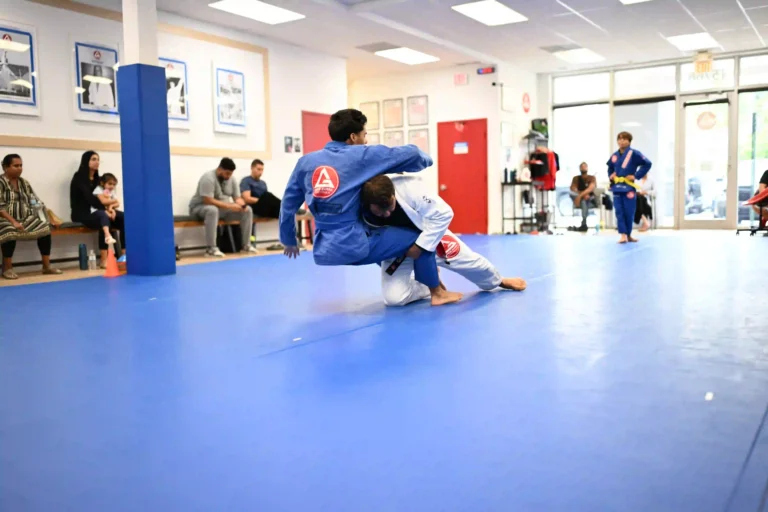
One reason for this feeling is the shift in academy dynamics. As a white belt, upper belts might have gone easy on you, and other white belts were just happy to survive. Now, you are a blue belt. The white belts want to tap you to prove they are ready for a promotion. The purple and brown belts stop taking it easy and start exposing the holes in your game. This can be ego-bruising. You might feel like you are getting worse, but you are actually just facing tougher resistance.
The Solution: Detach from the Outcome
The key to surviving this phase is to let go of your ego. Do not worry about “losing” to a white belt or getting smashed by an upper belt. Focus on learning. Accept that you are still a student. Remember why you started training in the first place: for fitness, for self-defense, and for fun. Keep showing up to our classes in West Kendall regardless of how your sparring rounds go. Consistency is the only cure for the blues.
2. Shift from Survival to Technical Exploration
At white belt, your primary goal was often just to keep your breath and not get submitted. At blue belt, your mindset must shift. You have the defensive tools; now it is time to build your offensive identity.
Experiment and Fail
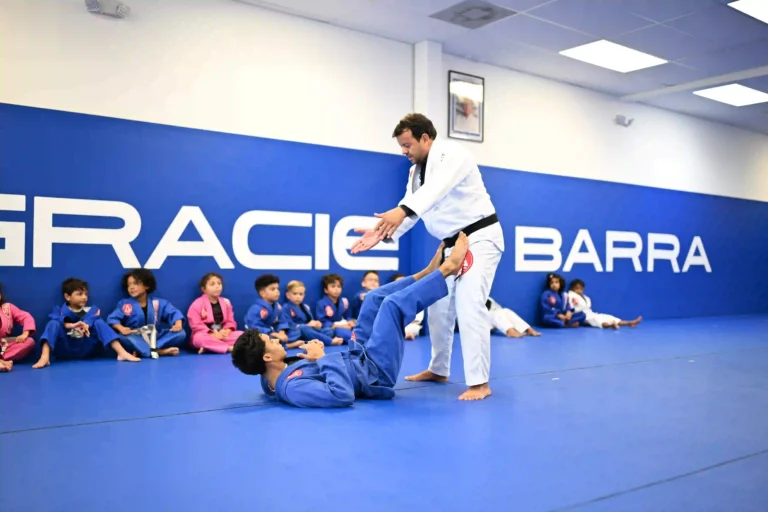
The blue belt is the time to experiment. This is the laboratory phase of your Jiu-Jitsu career. Try different guards. Attempt new sweeps. Work on passing styles you find difficult. Do not be afraid to put yourself in bad positions to see if you can escape using proper technique rather than explosive energy. You should feel comfortable trying the techniques taught by our expert instructors during live rolling. If you get tapped while trying something new, that is a success, not a failure. It means you are expanding your horizons.
Start Connecting the Dots
A white belt learns individual words; a blue belt starts writing sentences. You should begin to see how techniques connect. Learn to chain your attacks. If your opponent defends the armbar, move immediately to the triangle. If they defend the sweep, transition to a submission. This “flow” is the hallmark of a skilled blue belt. Start looking for these connections in every class.
3. Deepen Your Defensive Foundations
While exploration is key, you cannot neglect your defense. In fact, your defense needs to become impregnable.
Escaping with Technical Precision
As a blue belt, you should no longer rely on bench-pressing your opponent off you or exploding out of a hold. Those attributes fade; technique does not. Focus on the mechanics of your escapes. Are you framing correctly? are you hip-escaping at the right moment? Your goal should be to make your defense so solid that even higher belts struggle to submit you. This confidence in your defense will actually make your offense better, because you won’t be afraid to take risks knowing you can escape if things go wrong.
Guard Retention
A major focus for the blue belt should be guard retention. You need to learn how to keep your opponent in front of you and prevent them from passing. This requires active hips, strong grips, and an understanding of distance management. A blue belt with an impassable guard is a nightmare for anyone.
4. Set Specific, Short-Term Goals
The journey to purple belt takes years. If that is your only goal, you will lose motivation. Break your training down into smaller, manageable micro-goals.
The “One Month” Rule: Pick one specific position or submission and dedicate an entire month to it. For example, spend all of October focusing solely on the kimura. Attack it from everywhere. Study it. By the end of the month, you will own that technique.
Competition: Consider signing up for a local tournament. Nothing sharpens your focus like having a date on the calendar. Even if you don’t win, the preparation will level up your game significantly.
Attendance Goals: Set a target for weekly classes. Commit to training three or four times a week at Gracie Barra South Miami West Kendall and stick to it religiously.
5. Embrace Your Role as a Leader
You may not feel like a “leader” yet, but to the white belts, you are. You have achieved something they are striving for.
Be a Good Teammate
Help the white belts. Welcome new students. Remember how intimidated you felt on your first day? Be the person who makes them feel comfortable. When you partner with a newer student for drills, help them with the details (without “coaching” over the professor). Teaching or explaining a move to a beginner often solidifies your own understanding of it. Being a positive force in the community keeps you engaged and accountable.
Brazilian Jiu-Jitsu in Miami
The Journey Has Just Begun
Getting your blue belt is not the end of the road; it is the beginning of the real journey. You have the tools. You have the map. Now you just need to keep walking. There will be hard days, frustrating plateaus, and moments of doubt. But there will also be breakthroughs, moments of flow, and the incredible satisfaction of improvement.
Stay consistent, stay humble, and keep training. The purple belt is waiting for those who refuse to quit.
See you on the mats at Gracie Barra South Miami West Kendall.